
Showing posts with label wood. Show all posts
Showing posts with label wood. Show all posts
Friday, November 18, 2011


Saturday, November 12, 2011
Wednesday, November 9, 2011
heat miles
 A few weeks ago, Crunchy Chicken posted the 2011 Freeze Yer Buns Challenge. One of the participants, the North Park Homestead, described "heat miles" as something we should think about with the same devotion we offer to "food miles" in our efforts to locally source what we eat every day.
This year, with any luck, all of our heat will come within a mile and a half of our house.
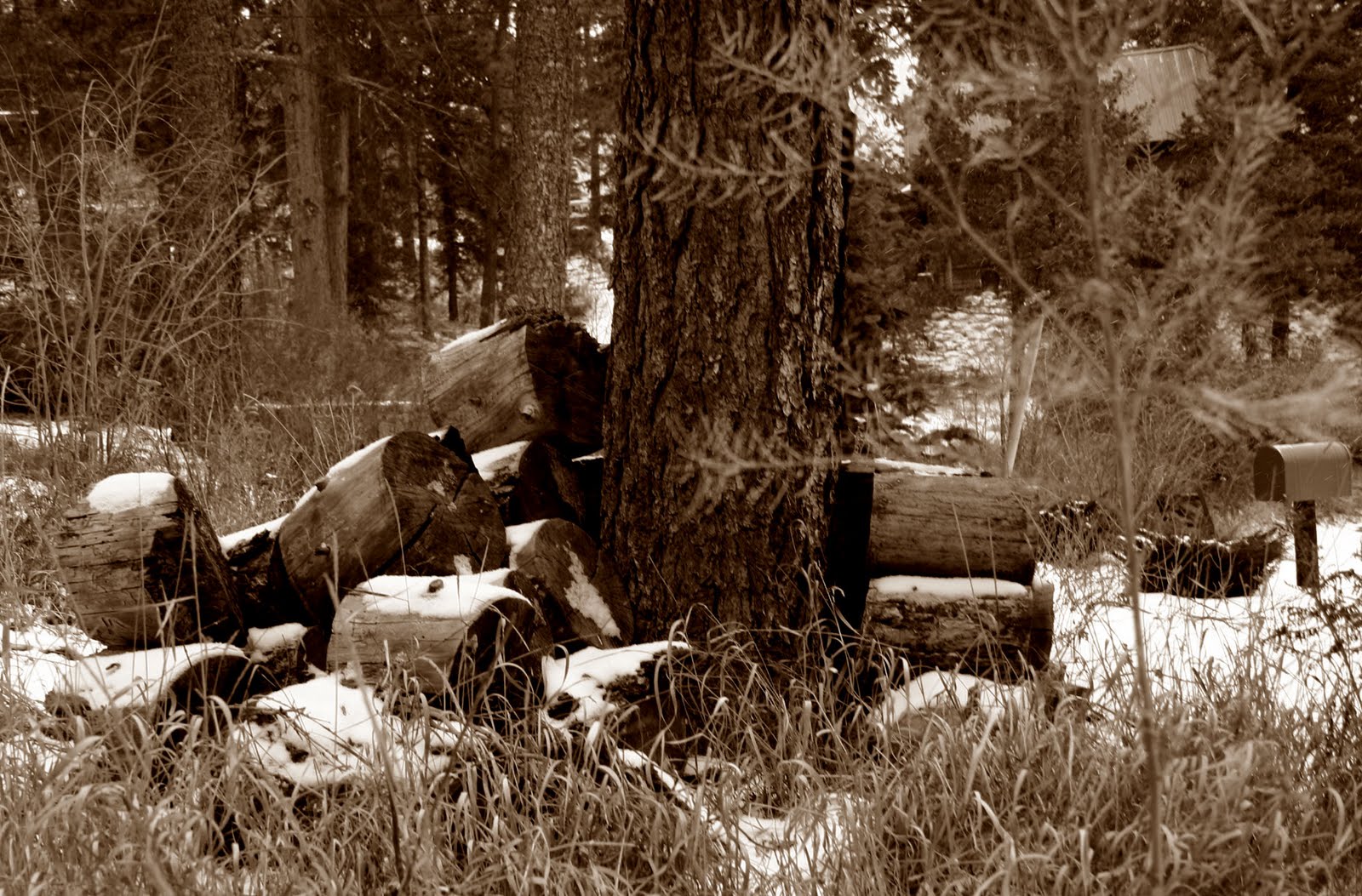
When our 700 square foot cabin was built at the base of Pike's Peak in 1927, it had no electricity or indoor plumbing, and the woodstove was its only source of heat. Since then, it's been retrofitted with the world's tiniest bathroom, electric lights and water heater, and a small CoZy Heater, which is less of a furnace than a glorified space heater. But unlike many modern houses, this cabin was designed with the stove in mind specifically to be the sole source of warmth. It sits in the center of the house, facing into a large living room, with the doors to the bedrooms nearby. The stove insert sits partially into a wide chimney made of local pink granite rocks, mostly about 10 inches in diameter. Enough of the surface of the stove sticks out into the room for you to heat dinner or boil a teakettle on top, but enough of the stove is nestled back into the rocks to allow them to act as a heat sink. It can take us up to two days of wood burning to get the rocks warm, but once they are, they will radiate heat back into the house for another two or three days.
When we light up the stove on chilly 40°F autumn days, it quickly raises the temperature inside the cabin to 80°. Last winter, our electricity and gas were out for several days during the coldest week of the year. But even while it was -20°F outside, our stove still kept the inside of the house around 60, all by itself. Needless to say, I was sufficiently impressed. It does get chilly at night, but we let the fire die down rather than waking up in shifts to tend it. With two adults and two 60-lb dogs snuggled up under thick blankets, we couldn't much care if it gets down into the 40s while we're sleeping, and the rocks re-radiating the warmth from earlier in the evening keeps our plumbing above freezing. We could turn on the gas heater for back-up if we needed to, but we haven't yet this year, even though we've already had two mountain snowstorms.
I write about our woodstove not just to brag about how awesome it is, but hopefully to inspire some folks reading to think about alternative sources of heat. For us, like many folks who have elderly or very young family members, turning the thermostat back to 60 or 50 degrees isn't really an option. Maybe it's because I've had a prior case of hypothermia, which makes me especially susceptible to the cold. Maybe it's because we, like many soldiers, started developing arthritis in our 20's. Whatever the reason, even when I spend the majority of my days working outside, I can never seem to take off my heavy winter jackets without shivering when the temperature is much below 70°. It encourages me to think that I can keep my home at whatever temperature I want, as long as I'm willing to trek up into the woodlot and cut the renewable resource required to warm it up.
Sunday, November 6, 2011

Wednesday, October 12, 2011
to split a log

“The first year I lived here, we cleared land and cut our firewood with hand saws. It was hard work and it took a lot of time, but we had that time and the work felt good. As winter approached, though, we realized that we had in no way cut enough wood to last us very long, and we panicked. We asked a friend who had a chainsaw to come over and cut up some of the big logs that we had lying around. These would have taken hours to saw through with the hand saw.
He came with his monster machine which fascinated and terrified us all. Our country peace was broken. The noise was deafening and overpowering. I was eating an orange and couldn’t taste it; the chainsaw demanded all my consciousness. The animals fled. We stood at a distance, fingers in ears, and watched the chainsaw rip through the wood in no time at all, leaving us a three-month supply of warmth and comfort and hot meals."
-- Country Women: A Handbook for the New Farmer
Last year, our routine of gathering firewood was simple, relaxing. In the crisp mountain air of early autumn, we’d load up the truck with dogs, chainsaw, and a few gallons of gatorade. Winding dirt roads lead us through the National Forest to the permit firewood cutting area, where for as little as $15, you could haul away dead softwoods to feed your family’s woodstove. So passed nearly every Saturday afternoon until the snows came, ambling along with the windows down, selecting only the most enticing downed logs to cut into fifteen-inch sections, and returning home with a modest stack of semi-dried wood to be split by hand in the evenings. In particular, T took pride in telling people he had to go straight home from work to split wood for the night’s fire, and meant it – our stash of stove-ready chunks rarely split more than two or three days ahead of the need.
The swing of a splitting maul sings an easy rhythm. Each time two quarters fall equally away from the head, I feel like I’ve come one swing closer to mastering an essential skill of our ancestors. The work is physical, but not difficult, and an hour or less a day isn’t enough to make the shoulders especially sore. We split on a section of stump next to the driveway, and set the pieces on the porch where the eaves shelter them from snow and water. We have two splitting stumps, actually – one for T, and one about six inches shorter for me. The half-foot difference in our height equates to almost exactly the same difference in our respective maul-swinging positions. I catch a glimpse of the cheap, lightweight axe our landlord left to us, and imagine her in her business suit, attempting to split the tiny pile of kindling she left for us when we moved in.
 We were on our way into the Forest again last weekend when serendipity came calling. The fire radio crackled to life just as we pulled out onto the paved road – traffic accident on the highway. Like much of Colorado, our small town’s fire department is entirely volunteer – not even the chief is paid – and so whatever help comes or doesn’t come to the folks entrapped in their vehicles following an accident is dependent entirely on the generosity of working people who can take time out of their day to render aid. Leaving the pups waiting anxiously in the cab of the truck, we rolled out to the scene with two of our neighbors. The accident turned out to be relatively minor, and we spent much of the call directing traffic around the tow truck and chatting about good places to find firewood. It just so happened that one of our neighbors and fellow volunteer firefighters knew of someone who was trying to get rid of a large pile of wood. A land development company clearing the way for new home sites had dumped a stack of softwood logs at the edge of their property, undecided about how to dispose of them and hoping they would eventually disappear. A tall pile of unclaimed logs, just waiting to be cut up and hauled away? We were happy to help them out. In exchange for a dozen of our home-grown brown eggs, this same neighbor loaned us the use of his hydraulic log splitter.
In one afternoon, we were able to cut, split, and haul away three or four pick-up loads of split wood. We now have already stacked – on the porch, on a firewood rack, on pallets beside the house – as much wood as we put up all season last fall. It’s heartening to feel so rich in renewable heat source. But at the same time, we unintentionally robbed ourselves of one of our favorite early evening activities. In the end, we decided to come back and fill up a few more truckloads without the benefit of the splitter. That way, we managed to get ahead on the work, but also left round pieces in a pile that could still serve as source of daily meditation. Lift, swing, split. Repeat.
Wednesday, February 2, 2011
miracle of wood heat
I don't know that I've ever been in cold like this.
Thermometer on the porch is reading -19°F. It only goes down to -30, which we might hit after nightfall. The windchill was supposed to be -40. I have about two days' worth of wood stacked on the porch. Inside the cabin, the woodstove is keeping the livingroom at about a cheery 60°. Not too bad, considering that the gas is out in our whole town. Our tiny furnace is hardly more than an oversized space heater. Never enough to heat the house by itself, it could still take the chill off and bring us up about five more degrees. I still have fuel for the kerosene heater, which I haven't lit yet, as well. Maybe I'll make some bread in the electric oven to get a little more heat that way, too.
The dogs are so much like little children, the older one copying me and the puppy copying T. The older dog will come inside when she's cold; she's made it a point to be outside doing her business for as few seconds as possible. The younger one, just like T, doesn't seem to notice how cold she is. She just wants to be where I am. She'll come out and frolic in the snow with me, steal sticks from my kindling pile, and generally ignore the temperature until all of a sudden she's really cold. Have to keep an eye on her. I wonder about getting them dog sweaters. Stupid as a fashion statement, they'd be practical if ever I wanted -- or needed -- to bring them on a hike with me in weather like this.
We have a new cat, the first cat I've owned since childhood. He's quite antisocial. Spending most of his days hiding under the couch, he comes out occasionally to bother the dogs and eat pieces of plastic. If he keeps attacking the puppy unprovoked, he's going to find himself locked outside with the cold and the foxes to fend for himself.
Work is canceled due to weather, as are most of my volunteer hobbies. The fire department is on standby, expecting to shelter residents affected by the extreme cold and lack of utilities. But so far, we haven't had any takers. Everyone up here on the mountain seems pretty self-sufficient. I wonder at what sort of panic might ensue if the folks down in Colorado Springs lost the utility umbilical cord to their furnaces in weather like this. Meanwhile, tendrils of woodsmoke curl up from my neighbors' stovepipes. An excuse to stay home, tend the fire, make cocoa, and catch up on reading isn't really so bad.
Thermometer on the porch is reading -19°F. It only goes down to -30, which we might hit after nightfall. The windchill was supposed to be -40. I have about two days' worth of wood stacked on the porch. Inside the cabin, the woodstove is keeping the livingroom at about a cheery 60°. Not too bad, considering that the gas is out in our whole town. Our tiny furnace is hardly more than an oversized space heater. Never enough to heat the house by itself, it could still take the chill off and bring us up about five more degrees. I still have fuel for the kerosene heater, which I haven't lit yet, as well. Maybe I'll make some bread in the electric oven to get a little more heat that way, too.
The dogs are so much like little children, the older one copying me and the puppy copying T. The older dog will come inside when she's cold; she's made it a point to be outside doing her business for as few seconds as possible. The younger one, just like T, doesn't seem to notice how cold she is. She just wants to be where I am. She'll come out and frolic in the snow with me, steal sticks from my kindling pile, and generally ignore the temperature until all of a sudden she's really cold. Have to keep an eye on her. I wonder about getting them dog sweaters. Stupid as a fashion statement, they'd be practical if ever I wanted -- or needed -- to bring them on a hike with me in weather like this.
We have a new cat, the first cat I've owned since childhood. He's quite antisocial. Spending most of his days hiding under the couch, he comes out occasionally to bother the dogs and eat pieces of plastic. If he keeps attacking the puppy unprovoked, he's going to find himself locked outside with the cold and the foxes to fend for himself.
Work is canceled due to weather, as are most of my volunteer hobbies. The fire department is on standby, expecting to shelter residents affected by the extreme cold and lack of utilities. But so far, we haven't had any takers. Everyone up here on the mountain seems pretty self-sufficient. I wonder at what sort of panic might ensue if the folks down in Colorado Springs lost the utility umbilical cord to their furnaces in weather like this. Meanwhile, tendrils of woodsmoke curl up from my neighbors' stovepipes. An excuse to stay home, tend the fire, make cocoa, and catch up on reading isn't really so bad.
Wednesday, January 19, 2011
story of a bookshelf

See this bookshelf?
Picture it as a tree.
A gentle old ash, growing near the edge of a University football stadium parking lot, who spent nearly a century watching young people play. One day, lightning strikes, breaking one if its thick upper limbs. In the rounded stub that remains of its once mighty arm, birds nest, squirrels play, and rainstorm fury funnels through into the heartwood. Not tornadoes nor student drivers could bring down this old tree, but rot is a real threat. The decision is made, and the tree is painted for removal.
Enter the young forestry student. I was granted the privilege of taking down this tree because I was enrolled in an optional timber harvesting class. I felled it, with my borrowed Stihl 360 chainsaw and my much-respected instructor as my swamper and lookout. We loaded it onto a truck, brought it back to the portable sawmill to cut into rough-hewn boards, which were then dried. Stacking the kiln, one on one with a mentor like an old-time apprentice, is one of my fondest college memories. Busy hands free tongues to speak. We discussed why the moisture content of boards intended for use as studs, used outside the vapor barrier of a house as structural support, needs to be different than boards intended for use as fine furniture inside a house. We discussed how the decline of square dancing popularity has left the young people of my generation with few outlets to interact with potential mates in a wholesome and supervised way. This was the kind of knowledge I wanted from college, and I didn't realize at the time that colleges are rarely in the business of dispensing useful knowledge. I learned a trade, and I learned to soak up the wisdom of elders whenever they are willing to dispense it.
From the kiln the boards go to the jointer, where they are straightened, and the edges made perfectly 90 degrees from each other. This step, I learned, is skipped in most commercial wood processing facilities. They place their boards directly into the planer, a different machine which smooths each side, but does nothing to ensure their squareness. As my teacher said, "If they went in as crooked boards, they'll come out crooked, too." After the planer, my boards could be ripped into the sizes I actually wanted for my shelf. Making the boards, in fact -- the steps changing the wood from a log into the pieces I could screw together -- was the most difficult and time-consuming step in the whole process. When you go down to the hardware store and buy hardwood boards, you've already paid someone to do the majority of the work for you.
 I graduated that semester, said my goodbyes, and trucked the finished boards home. The stain was the only part of the process that I didn't see the creation of myself. Piece by piece, it took shape, until the final bookcase you see in the first picture stood proudly in my living room. I didn't see the seed fall to the ground and grow into a young sapling. I didn't see the lightning that doomed that old grandparent to its day with the teeth of my chainsaw. But the pieces of the process that are influenced by humans, I got to trace, from forest to furniture.
That's the story of my bookshelf.
Subscribe to:
Posts (Atom)